


WHAT IS
Resin-Coated Sand?
Resin-coated sand is an engineered material manufactured by heating high-purity quartz sand before applying a uniform coating of resin that bonds to each grain. At Covia’s Troy Grove, Illinois, facility, team members combine advanced thermodynamics with decades of hands-on expertise to produce consistently high-quality resin-coated sands that are trusted across the industry.
Covia’s resin-coated sand combines precision chemistry and high-purity materials to deliver consistent strength, flowability and performance-supporting efficient mold and core production for superior castings.
PHYSICAL AND CHEMICAL PROPERTIES
Covia’s resin-coated sand is made with spherical, round monocrystalline quartz sand that exceeds 99.8% purity. The resin coating enhances the sand’s thermal stability, flow characteristics and tensile strength for demanding foundry applications.
WHERE DOES RESIN-COATED SAND
Come From?
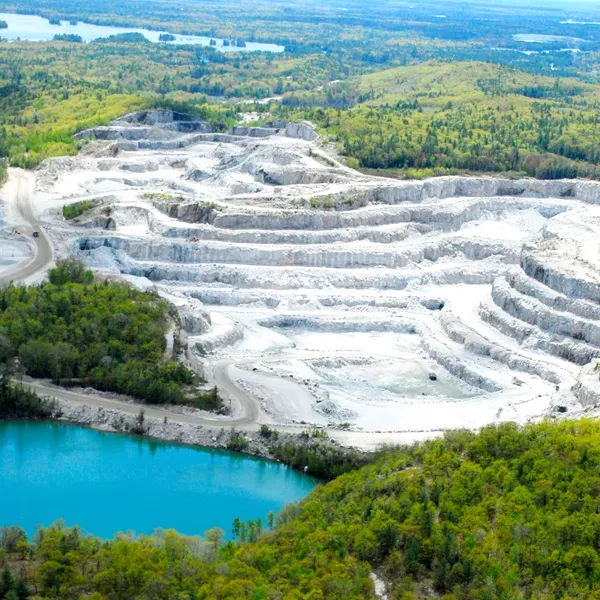
Covia begins with select silica sand sourced from high-purity quartz reserves across North America. The sand is transported to our Troy Grove, Illinois, facility-an ISO-certified manufacturing site dedicated to producing resin-coated foundry sand.
At Troy Grove Resin, team members use a carefully balanced combination of heat, chemistry and timing. Sand is preheated, blended with resin and crosslinkers in a pug mill and the reaction is precisely halted with water before drying and screening. Many of Troy Grove’s team members have been with Covia for decades, embodying the consistency and care that go into every batch shipped to customers.
Covia’s integrated logistics and supply chain management ensure on-time delivery and product consistency, helping foundries operate efficiently and reliably.



Applications /
Markets
In the foundry market, Covia’s resin-coated shell sand and core sand play a critical role in producing high-quality metal castings.
The sand’s uniform spherical shape and high purity provide superior flowability, compaction and mold definition, resulting in smoother surfaces and stronger cores.
Key benefits include:
- Greater packing density for improved dimensional accuracy
- Reduced resin demand with higher tensile strength
- Lower attrition for better sand reclamation and cost efficiency
- Cleaner operations and reduced emissions in foundry environments

Mythbusters
Sustainability
Message
Next-generation resin-coated sands, such as TECHNISAND TRUCOAT® LE from Covia, can help foundries reduce in-plant smoke and hazardous air pollutants (HAPs), without compromising performance.
Would you like to know more about Covia’s resin-coated sand?